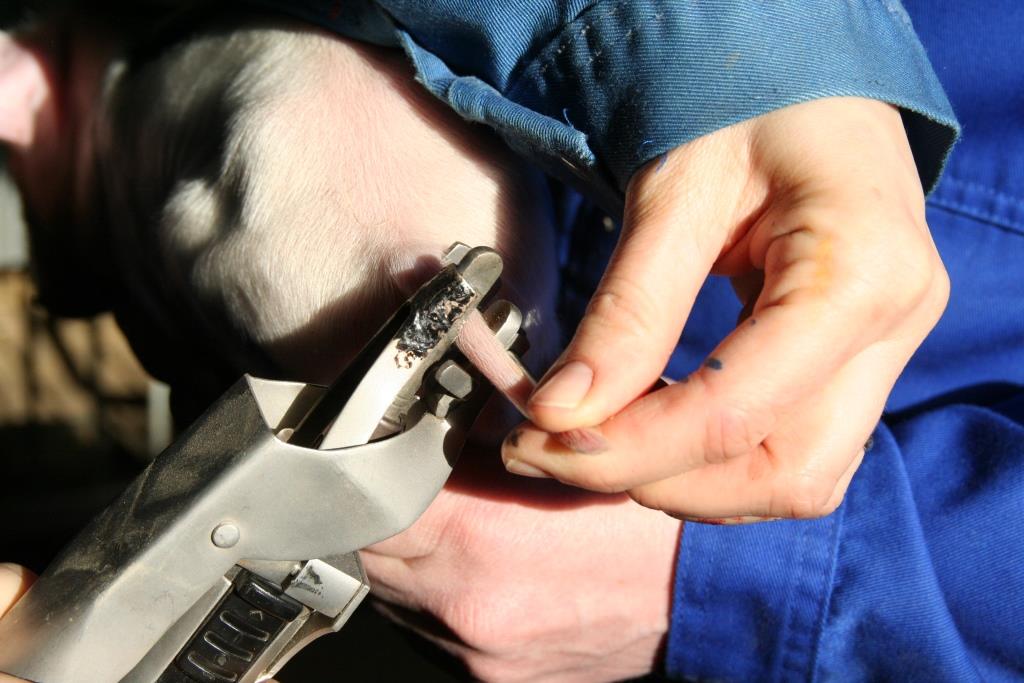
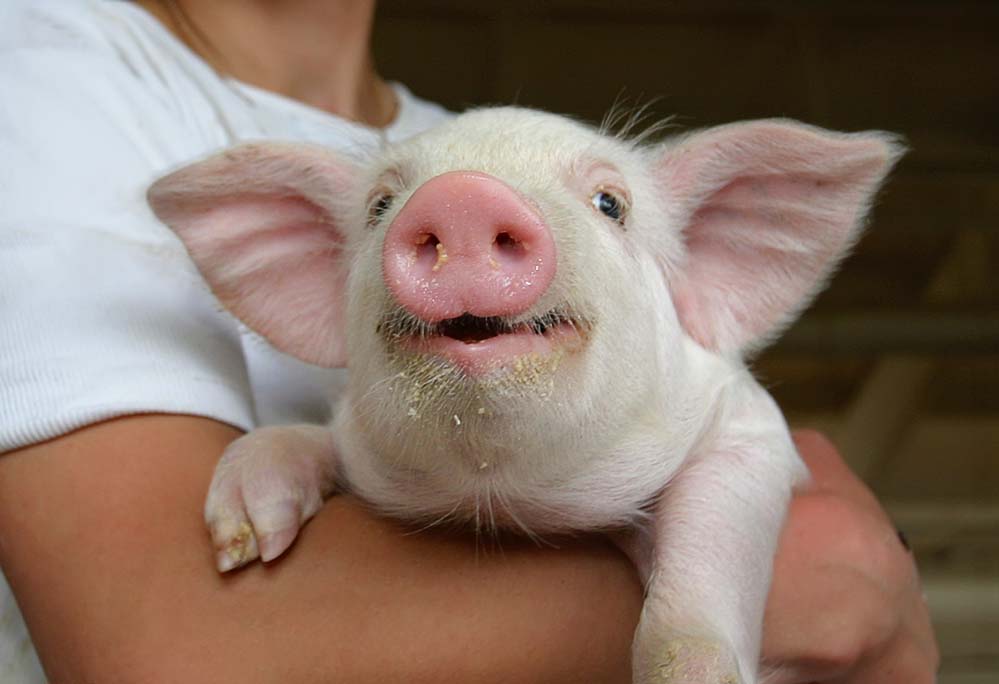
Anna Valros and Mari Heinonen published a paper called “Save the pig tail” in Porcine Health Management.
Abstract
Tail biting is a common problem in modern pig production and has a negative impact on both animal welfare and economic result of the farm. Tail biting risk is increased by management and housing practices that fail to meet the basic needs of pigs. Tail docking is commonly used to reduce the risk of tail biting, but tail docking in itself is a welfare problem, as it causes pain to the pigs, and facilitates suboptimal production methods from a welfare point-of-view. When evaluating the cost and benefit of tail docking, it is important to consider negative impacts of both tail docking and tail biting. It is also essential to realize that even though 100% of the pigs are normally docked, only a minority will end up bitten, even in the worst case. In addition, data suggests that tail biting can be managed to an acceptable level even without tail docking, by correcting the production system to better meet the basic needs of the pigs.
–
Source
Valros, A., M. Heinonen, 2015. Save the pig tail. Porcine Health Management 2015 1:2.
Oberst et al. (2015) presented a poster on the effect of tail docking in neonatal pigs on the expression of genes involved in modulating anxiety-like behaviour at the annual meeting of the Scandinavian Association for the Study of Pain (SASP) at the Karolinska Institute, Stockholm, Sweden (13-14th April 2015).
The abstract is presented below; the poster can be found here
Abstract
Background: Adverse experiences in early life, such as exposure to stress, can have long term detrimental effects on the future physiology and behaviour of the animal. Typically animals exposed to such experiences are more anxious and more reactive to stress in later life. Tail biting is a major problem in modern pig production, both in terms of animal welfare and productivity. Tail docking in early postnatal life is common practice to reduce risk of this problem, but causes pain and may alter pain sensitivity.
Aims: To investigate whether a significant painful experience in early life (tail docking) alters the expression of genes in the amygdala that are linked to an anxiety-prone phenotype.
Methods: Eight female piglets (Landrace/Large White x synthetic sireline) were used. Four piglets were tail docked (amputation of approx. 2/3 of the tail) on post-natal day 3 using hot-iron cautery and four sham-docked piglets served as intact controls. On post-natal day 10, pigs were sedated and then euthanized by barbiturate overdose. Brains were removed, the amygdala grossly dissected and frozen on dry ice. 20μm sections were cut and subsequently processed using in situ hybridisation with radiolabelled probes complementary to corticotropin-releasing hormone receptor-1 (Crhr1) and CRH receptor-2 (Crhr2) mRNA.
Results: Crhr1 mRNA expression was significantly greater (p<0.05) in the amygdala of tail-docked piglets compared with the sham-docked animals. There was no significant difference detected in Crhr2 expression in the amygdala between the groups.
Conclusion: Increased expression of Crhr1 in the amygdala is associated with an anxiety-prone phenotype in rats and pigs, thus it is likely that tail docking in early life leads to enhanced anxiety which may have a negative impact on pig welfare. Ongoing experiments will determine whether these central changes in gene expression are long-lasting.
[Support: BBSRC, DEFRA-part of ANIWHA ERA-NET initiative].
Source:
Oberst, P., D.A Sandercock, P.Di Giminiani, S.A. Edwards, P.J. Brunton, 2015. The effect of tail docking in neonatal pigs on the central expression of genes involved in modulating anxiety-like behaviour. Abstract for the poster presentation at the Scandinavian Association for the Study of Pain (SASP) Annual Meeting, Karolinska Institute, Stockholm, Sweden. 13-14th April 2015.
Herskin et al. (2015) studied the formation of neuroma’s in pigs after tail docking.
Abstract
In pig production, piglets are tail docked at birth in order to prevent tail biting later in life. In order to examine the effects of tail docking and docking length on the formation of neuromas, we used 65 pigs and the following four treatments: intact tails (n=18); leaving 75% (n=17); leaving 50% (n=19); or leaving 25% (n=11) of the tail length on the pigs. The piglets were docked between day 2 and 4 after birth using a gas-heated apparatus, and were kept under conventional conditions until slaughter at 22 weeks of age, where tails were removed and examined macroscopically and histologically. The tail lengths and diameters differed at slaughter (lengths: 30.6±0.6; 24.9±0.4; 19.8±0.6; 8.7±0.6 cm; P<0.001; tail diameter: 0.5±0.03; 0.8±0.02; 1.0±0.03; 1.4±0.04 cm; P<0.001, respectively). Docking resulted in a higher proportion of tails with neuromas (64 v. 0%; P<0.001), number of neuromas per tail (1.0±0.2 v. 0; P<0.001) and size of neuromas (1023±592 v. 0 μm; P<0.001). The results show that tail docking piglets using hot-iron cautery causes formation of neuromas in the outermost part of the tail tip. The presence of neuromas might lead to altered nociceptive thresholds, which need to be confirmed in future studies.
• Post-mortem examination was performed in 798 piglets from 363 litters.
• The major post-mortem findings were starvation (34%) and crushing (28%).
• Fewer piglets starved to death in STRAW compared to CONTROL-litters.
• Strategic use of straw reduced the number of stillborn piglets by 27%.
Abstract
Piglet survival is the outcome of complex interactions between the sow, the piglet and
their environment. In order to facilitate nest-building and to provide a suitable environment for the newborn piglets, a strategic method to supply loose housed sows with large quantities of straw at farrowing has been developed by Swedish piglet-producing farmers. The objectives of this cohort study were to use post-mortem findings to assess the causes of death and to quantify the effect of a large quantity of straw provided before farrowing compared to limited small daily amounts on stillbirths, post-mortem findings in piglets dying within 5 days after birth and the pre-weaning mortality. On each of four commercial piglet-producing farms in South-West Sweden, one batch of sows was studied during two consecutive lactations. At inclusion, sows were randomly assigned to two treatment groups, and sows remaining in the batch during the next lactation switched treatment group. In the STRAW group (n = 181 litters) sows were provided with 15–20 kg of chopped straw 2 days prior to the calculated date of farrowing. Sows in the CONTROL group (n = 182 litters) received 0.5–1 kg of chopped straw on a daily basis plus about 2 kg for nest-building when the stockperson judged the sow to be about to farrow. After onset of farrowing, additionally 1–2 kg was given. Post-mortem examination was performed in all piglets that died within 5 days after birth (n = 798). The three major post-mortem findings were starvation (34%) crushing by the sow (28%), and enteritis (24%). In conclusion, strategic use of large quantities of straw reduced the number of stillborn piglets per litter by 27% (p = 0.007). Under the conditions studied, the pre-weaning mortality of liveborn piglets was not affected by treatment; however, the distribution of post-mortem findings differed with fewer piglets dying due to starvation and more due to crushing and enteritis in STRAW litters.
• Nest building behaviour and farrowing duration were studied in 138 sows.
• A large quantity (15–20 kg) of straw given once was compared to small daily amounts.
• Time spent nest building during 18 h pre-partum was increased by 19%.
• A 1-h increase in time spent nest building reduced the farrowing duration by 12%.
Abstract
In spite of domestication, sows are still genetically programmed to perform nestingbehaviour close to farrowing. In order to facilitate nest building, a method for a strategic useof large quantities of straw has been developed by Swedish piglet producing farmers. Theobjectives of the present study were to quantify the effect of strategic use of 15–20 kgof chopped straw given once 2 days prior to expected date of farrowing, compared tosmall daily amounts (0.5–1 kg) and 2 kg close to farrowing (controls), on the nest buildingbehaviour and the duration of farrowing. The behaviour from 18 h pre-partum until 1 h afterbirth of first piglet and the duration of farrowing was continuously observed in 138 videorecordings from 4 commercial farms. On each farm, 20–34 sows (parity ≥ 2) were stud-ied during one or two consecutive lactations. Compared to controls, strategic use of strawtriggered the sows to start nest building earlier and increased the total time spent nestbuilding pre-partum by 19% (p = 0.039). Sows given large amounts of straw also performedless nesting behaviours during the first hour after birth of the first piglet. This shows thatnest building is affected not only by the presence of straw, but also by the quantity of strawprovided, and that 2 kg of chopped straw seems to be too little to make the sow terminatenest building well in advance of farrowing. There was no significant effect of treatment onthe duration of farrowing but a strong negative association was found between time spentnest building pre-partum and the duration of farrowing regardless of treatment. The modelpredicted a 1-h increase in total nest building time pre-partum to be associated with a 12%(95% CI = 4–19%) shorter duration of farrowing (p = 0.004).
Nestbuilding sow (Photo by Rebecka Westin)Farrowing sow and piglets on straw (Photo by Rebecka Westin)
A recent paper by Valros et al. (2015) shows evidence for changes in monoamine metabolism in the brains of pigs affected by tail biting, both in the victims and the biting pigs.
Abstract
Tail biting in pigs is a major welfare problem within the swine industry. Even though there is plenty of information on housing and management-related risk factors, the biological bases of this behavioral problem are poorly understood. The aim of this study was to investigate a possible link between tail biting, based on behavioral recordings of pigs during an ongoing outbreak, and certain neurotransmitters in different brain regions of these pigs. We used a total of 33 pigs at a farm with a long-standing problem of tail biting. Three equally big behavioral phenotypic groups, balanced for gender and age were selected, the data thus consisting of 11 trios of pigs. Two of the pigs in each trio originated from the same pen: one tail biter (TB) and one tail biting victim (V). A control (C) pig was selected from a pen without significant tail biting in the same farm room. We found an effect of tail biting behavioral phenotype on the metabolism of serotonin and dopamine, with a tendency for a higher 5-HIAA level in the prefrontal cortex (PFC) of TB compared to the other groups, while V pigs showed changes in both serotonin and dopamine metabolism in the striatum (ST) and limbic cortex (LC). Trp:BCAA and Trp:LNAA correlated positivelywith serotonin and 5-HIAA in the PFC, but only in TB pigs. Furthermore, in both ST and LC, several of the neurotransmitters and their metabolites correlated positively with the frequency of bites received by the pig. This is the first study indicating a link between brain neurotransmission and tail biting behavior in pigs with TB pigs showing a tendency for increased PFC serotonin metabolism and V pigs showing several changes in central dopamine and serotonin metabolism in their ST and LC, possibly due to the acute stress caused by being bitten.
Reference: Valros, A., Palander, P., Heinonen, M., Munsterhjelm, C., Brunberg, E., Keeling, L., & Piepponen, P. (2015). Evidence for a link between tail biting and central monoamine metabolism in pigs (Sus scrofa domestica). Physiology & Behavior.
The yearly FareWellDock meeting was held on October 9th 2014 using video conferencing between participants from Finland (Anna Valros, Mari Heinonen, Camilla Munsterhjelm), the UK (Sandra Edwards, Dale Sandercock, Pierpaolo Di Giminiani), France (Armelle Prunier, Celine Tallet), Denmark (Lene Juul Pedersen, Margit Bak Jensen, Mette Herskin), The Netherlands (Marc Bracke), Sweden (Stefan Gunnarsson, Rebecka Westin), and Norway (Andrew M Janczak, Janicke Nordgreen, Anastasija Popova, Frida Aae). Researchers in Work Package 1 shared updates on the characterization of pig tail caudal nerves and the histopathology of traumatic neuromas in docked pig tails, as well as activities aimed at testing effects of tail docking with or without analgesia on neural transmission, endocrine responses, and behaviour and facial expressions. Work Package 2 researchers summarized studies testing effects of providing straw on exploratory and tail directed behaviour, use of remote sensors for animal monitoring, and the efficacy of measures to prevent tail biting. For Work Package 3 updates were given on relationships between health and the risk of tail biting outbreaks. Progression in research and dissemination was summarized relative to project milestones and deliverables and plans were made for the next meeting to be held in Paris in April 2014. The meeting was productive and indicated good work progression in the enthusiastic project team.
We found e.g. that pieces of recently harvested young birch trees, suspended horizontally below snout level and with a length of 30 cm of tree stem per pig, reduced mild tail and ear biting and increased object exploration, but did not reduce severe tail biting, i.e. biting part of the tail off. Another finding was that a polythene pipe cross, suspended horizontally at snout level, also increased object exploration (as compared to controls with a simple metal chain) but did not reduce tail and ear biting, supporting earlier findings that the frequency of object exploration is not a sufficient predictor of the capacity of that object to reduce tail biting.
On April 4, 2014 the Dutch Secretary State of Economic Affairs, Sharon Dijksma, reported to the Dutch parliament the following on the issues of tail docking and tail biting in pigs:
Firstly, research has been commissioned on tail biting and tail docking in pigs (2013-2017).
Secondly, steps have been taken to reduce tail docking in practice (Van Dekken, 28286, nr. 666).
The House of Parliament has asked the government to negotiate an end date for tail docking together with the stakeholders who signed the Declaration Dalfsen.
Since early 2013 the European Commission is working on a plan to address routine docking of piglets at the European level. In parallel, the Dutch pig sector organisations LTO and NVV, and the Dutch Society for the Protection of Animal together drafted and signed the Declaration of Dalfsen, which was presented on June 10, 2013. The Declaration focuses on the prevention of biting , the gradual reduction of short tail docking, leading finally to the responsible ending of the practice of tail docking . It is a process in which partners have expressed trust in each other. These are important steps in the right direction. The Animal Welfare policy note states that the declaration is endorsed and supported by the funding of research. In about two years this research is likely to provide insight if and which promising solutions exist. At that point in time more will be known about the progress made at the European level. At that time the Secretary of State and the partners of the declaration will determine a realistic deadline to responsibly stop the tail docking of pigs.
Finally, as to the strict compliance of the EC Directive on pig welfare in Europe (Ouwehand, TK 21501-32, nr. 750): The House of Parliament has asked the government insist that the European Commission will move towards strict enforcement of animal welfare guidelines and reports on compliance in the Member States. This is related to signs of non-compliance of the Directive by several Member States and more specifically in the areas of tail docking and the routing filing of canine teeth.
With a view to improving the implementation and enforcement of the Directive lying down minimum standards for the protection of pigs (2008/120/EC), the Commission – partly based on the Dutch request – started the development of guidelines supplementing the Directive, including a guideline on tail docking. These guidelines (which are expected to be completed this year) are expected to improve enforcement and compliance.
Scientists from eight countries are starting a research project on how to prevent one of the major behavioural problems on commercial pig farms: tail biting. The aim of the collaboration is to yield new knowledge which will help to remove the need for tail docking, the currently widespread preventive practice of cutting off part of the tails of young piglets..
Why do pigs’ tails get damaged?
Tail biting is one of the major problems in modern pig production, both in terms of animal welfare and production economy. It is an abnormal behaviour that can result from several causes, such as stress, illnesses, a poor indoor air quality or competition for food or water. One of the main causes is lack of materials that the pigs can chew on or root. Pigs have a strong innate need for exploring their environment by chewing, biting, rooting and manipulating various objects and materials. When there are not enough exploration and manipulation substrate in a pen, the biting can get redirected to other pigs, especially ears and tails, which may result in tail biting.
In many European countries, tail docking – the practice of cutting part of the piglets’ tails at a young age – is used to control the problem. While this does reduce the risk of being bitten, it causes pain during cutting. Is also possible that, for the rest of their lives, damage to the tail nerves caused by docking may alter the sensitivity of the tail to touch. Some farmers, consumers, legislators etc. would like to stop the practice of tail docking. The EU pig directive states that tail docking can only be used if other means of preventing the behaviour have been tried. In some countries, for example Sweden, Norway and Finland, the practice of tail docking already is banned., These countries therefore provide an opportunity for testing other methods to prevent tail biting without the need to dock.
Searching for new knowledge on causes and prevention
The FareWellDock project is a three-year research project starting this autumn in eight countries: the UK, France, the Netherlands, Denmark, Sweden, Norway, Finland and the USA. The overall aim is to supply necessary information for quantitative risk assessment of tail biting, and to stimulate the development towards a non-docking situation in the EU.
The start-up meeting of the project took place on November 5 and 6 in Finland, after which the research will be carried out in three complementary international researcher activities. One group will delve into developing improved measures to prevent tail biting. An essential part is research into reasons for tail-biting outbreaks: which factors in the daily life on farms actually trigger this unnatural behaviour? This is work package 3 of the project. The group in work package 2 will investigate what quantity of straw, or other chewing and rooting materials, would be sufficient to satisfy the pigs’ need to explore and therefore reduce tail biting risk, and how to improve the feasibility of using straw on farms with different manure systems. The third group of scientists (work package 1) will focus on finding out what actually happens to the piglets that are tail-docked: how much pain piglets feel during docking, whether this results in longer-term pain and how this compares to the pain which is experienced by pigs which are tail bitten should an outbreak occur.
The project is led by Professor Anna Valros of the University of Helsinki in Finland. The other research institutes participating in the project are Scotland’s Rural College and Newcastle University in the UK, INRA in France, Aarhus University in Denmark, Wageningen UR Livestock Research in the Netherlands, SLU in Sweden, the Norwegian School of Veterinary Science and USDA-ARS in USA. The project is part of the European Animal Health and Welfare ERA-net initiative (ANIHWA), which aims at increasing cooperation of national research programmes on the health and welfare of farm animals.