Tag Archives: pain

Histological and neurophysiological pain assessment in young pigs

Original title: Approche histologique et neurophysiologie de la douleur liée à la coupe de queue chez les porcelets

Presentation of Dr. Dale Sandercock (SRUC) at a seminar on histological and neurophysiological approaches to pain assessment in young pigs. INRA-PEGASE, St-Gilles, France, December 14th 2015

Abstract

Concerns exist over the long term consequences of tail docking on possible tail stump pain sensitivity due to the development of traumatic neuromas in injured peripheral nerves. Traumatic neuroma formation may cause detrimental sensory changes in the tail due to altered peripheral and spinal neuronal excitability leading to abnormal sensation or pain. We have investigated tail injury and traumatic neuroma development by histopathological assessment after tail docking and measured the expression of key neuropeptides associated with peripheral nerve regeneration, inflammation and chronic pain. In complimentary studies on tail docking and tail biting, we have developed behavioural assessment approaches to measure mechanical nociceptive thresholds (MNT) in the pig tail in purpose built test set-up using a Pressure Application Measurement (PAM) device. Using these approaches we have determined baseline MNT in intact tails along different regions of the tail and also measured changes in MNT over time in pig with resected tails (simulation of the effect of tail biting). An overview of other Scotland’s Rural College (SRUC) pig health and welfare research projects is also presented.

Presentation Pic INRA seminar on pain (D Sandercock, 2015))

News from The Netherlands (and Germany)

This first week of February 2016 two items related to tail biting appeared in farmers’ press in The Netherlands. In addition, we recently provided input into a European project on the welfare of poultry, which will be reported on briefly below.

One news item announced that farmers are invited at the Intensive Farming Fair in Venray (LIV Venray), March 1-3 2016. At the fair two finished tail-biting projects will be presented and discussed with entrepreneurs who are active in intensive farming. One of the projects is ‘Keeping pigs with intact tails’.

The other item was a report on the German tail biting (Ringelschwanz-)project. First results of the curly-tail project in North-Rhine Westphalia showed that more than one quarter of piglets at 15 participating research farms had damaged tails before the end of the rearing period. At some farms half of the tails had been bitten. At the 15 farms participating in the study 30-94 piglets had been reared on each farm without tail docking. Outbreaks of tail biting appeared to be associated with streptococcus infections. Prevention and intervention strategies included providing dried maize silage or alfalfa hay twice daily and the isolation of biters respectively. Most tail biting occurred between week 2 and 4 after weaning. This level of tail biting is not so good news. If these levels of tail biting would persist, it may indicate that intensive systems cannot be made compatible with acceptable levels of animal welfare. Fortunately, however, experiences in Finland indicate that it should be possible to keep undocked pigs in conventional systems at much lower levels of tail biting (around 2% based on slaughter house data).

The German farmers union and North-Rhine Westphalia have agreed 1.5 years ago that they intend to stop tail docking by 2017. This will be done provided on-farm research shows that tail biting among pigs with intact tails does not reduce animal welfare. The general expectation is that the objective of safely quitting tail docking cannot be met.

From a Dutch research perspective two notes appear to be relevant:

The first is that our semantic-modelling approach provides a unique methodology to determine/assess  the cut-off point between the welfare impacts of tail biting and tail docking using formalised biological reasoning and scientific evidence. In this computation one must take into account all relevant aspects: So, not only the point that the welfare of tail bitten pigs is reduced due to blunt trauma (biting) compared to the sharp trauma of tail docking at an earlier age. But also the point must be recognised that the welfare of tail biting pigs may relatively be improved when they can bite their penmates’ tails, compared to when they cannot (other things being equal, i.e. lack of suitable enrichment). What matters for welfare as considered from the animals’ point of view is the extent to which they can satisfy their needs, e.g. for biting and the expression of species-specific foraging behaviour, taking into account also the activation of coping mechanisms such as redirected and harmful-social behaviours.

The second thing to note about the results of the German research project is the following. In addition to taking note of the bad news (many bitten tails, which has to be taken seriously, perhaps even to the point that the conclusion must be drawn that intensive systems are not compatible with acceptable animal welfare), one may also try to move forwards for the time being by focussing on the good news: Two out of the 15 pilot farms in Germany managed to keep all piglets’ tails intact. Other farms may learn from what was done on these farms to keep tails intact. Furthermore, since the EC Directive requires that all farms try to periodically keep at least some intact pigs, a 10% success rate could provide sufficient scope for progress at the population level, even when the causes of the success are poorly understood. This can be concluded from a methodology we designed previously to solve complex welfare problems like feather pecking in poultry and tail biting in pigs. This methodology has been called ‘Intelligent Natural Design’ (INO in Dutch; see also Bracke, 2010). It basically uses evolution to select the best farms to make increasing progress towards the objective of completely stopping the practice of routine tail docking in pig farming.

Countering the routine practices of tail docking and beak trimming, as well as preventing and treating outbreaks of tail biting and feather pecking requires an understanding of tipping points. Recently, we modified our tipping-bucket model for tail biting for inclusion on the Henhub website. This website, which is part of the Hennovation project, gives information about welfare issues in poultry, esp. (at present) feather pecking. On that site the modified tipping-bucket model can be found under the post describing the mechanism of feather pecking.

Tipping-bucket model of tail biting in pigs

.
Bracke, M.B.M. 2010. Towards long(er) pig tails: New strategy to solve animal welfare problems. In: Lidfors, L., Blokhuis, H., Keeling, L., Proceedings of the 44th Congress of the ISAE, August 4-7 2010, Wageningen Academic Publishers, Wageningen, p. 135. (Poster, ISAE 2010, Uppsala, Sweden, Aug 4-7.

Preliminary study on tail nerves in piglets after tail docking

Carr, R.W., J.E. Coe, E. Forsch, M. Schmelz, D.A. Sandercock, 2015. Structural and functional characterisation of peripheral axons in the caudal nerve of the neonatal pigs: Preliminary data. Proceedings of the 9th EFIC Congress, Vienna, Sept 2-5.

Summary

The pig tail is innervated by the caudal tail nerves and it is evident at the site of injury after tail docking (i.e. 8/9th caudal vertebrae) that a relatively high proportion of both C and A-fibres can be affected following peripheral nerve transection, with implications for axonal excitability and nociceptive processing in the tail stump.
As a proof of principle, it is possible to assess A- and C-fibre axonal function using electrical axonal excitability techniques for pig caudal tail nerve. In neonatal caudal nerves, A and C-fibre axons show significant changes in conduction speed which are related primarily to neonatal age.
Future studies will examine axonal functional properties in pig tails later in life where traumatic neuroma formation in the caudal nerves is present.

Annotated TEM micrograph of tail nerves (Dale Sandercock)

Abstract

Structural and functional characterisation of peripheral axons in the caudal nerve of the neonatal pigs: Preliminary data
R.W. Carr1, J.E. Coe2, E. Forsch1, M. Schmelz1, D.A. Sandercock2
1Department of Anaesthesiology, University of Heidelberg, Mannheim, Germany
2Animal and Veterinary Science Research Group, Scotland’s Rural College (SRUC), Easter Bush, United Kingdom

Background and aims: Early postnatal tail docking (amputation of 2/3rds of the tail) in piglets is performed as a preventative measure to minimize potential trauma associated with tail biting in older animals. The aim of this study was to investigate caudal nerve axonal composition and the effects of tail docking on axonal function in neonatal pigs.
Methods: Axonal composition was examined using Transmission Electron Microscopy (TEM). Functional assessment of A and C-fibre axons was performed in vitro using compound action potential (CAP) recordings from isolated nerve fascicles.
Results: TEM revealed both myelinated and unmyelinated axons in dorsal and ventral caudal nerves. Myelinated axons ranged in size from small diameter thinly myelinated Aδ-axons to larger diameter Aβ-axons (mean 2.30; range 0.7-6.3 μm). Unmyelinated C-fibre axons clustered together in multiple Remak bundles (mean 0.7; range 0.3-1.9 μm). Caudal nerves were harvested for functional assessment at 5 days of age from undocked tails and at 12.3 days (i.e. 9.3 days after docking) from docked pigs. The average A-fibre CAP amplitude from undocked tails was larger (1599.6±552.9μV) and conducted more rapidly (9.79±2.04m/s) than the A-fibres from docked tails (amplitude 1065.1±507.6μV and c.v.=7.78±2.57m/s). For C-fibres, the average axonal conduction velocity in docked tails was slower (1.74±0.2m/s) than in undocked tails (2.26±0.41m/s). Axonal conduction in caudal nerve C-fibres from both intact and docked animals was completely blocked by 500 nM tetrodotoxin (TTX) suggesting conduction was mediated primarily by TTX-sensitive NaV-isoforms.
Conclusions: As a proof of principle study, it is possible to functionally assess A- and C-fibre axons in pig caudal nerve using electrical axonal excitability techniques.
Acknowledgments: ANIWHA.

Poster Carr et al. 2015

Soundbites Pig Welfare Conference: 2. Presentations

On 29 – 30 April 2015 Danish Minister for Food, Agriculture and Fisheries, Dan Jørgensen hosted an international conference “Improving Pig Welfare – what are the ways forward?“.

During the two-day conference, top academics, experts and political stakeholders from around the world debated and worked to prepare the way forward in improving pig welfare in Europe and ultimately in the world.

Below you find ‘soundbites’ from conference presentations, all more or less related to the subjects of study in the FareWellDock project.

The Welfare Challenges Facing The Pig Sector
Peter Stevenson, Chief Policy Advisor of Compassion in World Farming, UK
Interview (video):
We have created a society where farmers’ margins are so low that they often have no choice but to have very low welfare (P. Stevenson)
We need to find a way in which we can make moving to higher welfare economically viable (P. Stevenson)
Presentation:
The EU should protect farmers from low welfare imports (P. Stevenson)
Most pigs in EU are given no enrichment or ineffective objects such as chains. … Plastic chewing sticks & balls are not effective enrichment (P. Stevenson)
An intact curly tail may well be the single most important animal-based welfare indicator in finishing pigs (EFSA update 2011, cited by P. Stevenson).
The average benefit of raising uncastrated pigs is around €5 per pig due to better feed conversion (EC, 2013, cited by P. Stevenson)
Consumers can drive animal welfare improvements – Don’t keep them in the dark (P. Stevenson).

Could Animal Production Become a Profession?
David Fraser, Professor, University of British Columbia, Canada
Interview (video):
Could pig producers function more like professionals and less like an industry? Professionals set their own standards. (D. Fraser)
Presentation:
The best common people are the agricultural population, so that it is possible to introduce democracy as well as other forms of constitution where the multitide lives by agriculture or by pasturing cattle. Aristotle, “Politics” (cited by D. Fraser).
In the past half century, animal agriculture in the U.S. has been taken over by corporations, turning family farms into factory farms (Farm Sanctuary, 2009, cited by D. Fraser).
Farm animal health levels: Piglet deaths: 0-50%; bursitis: 0-83%; sow mortality: 0-20%; dairy cow lameness 0-85%; broiler lameness: 0-90% (D. Fraser).
Animal welfare reforms have been modeled on worker welfare legislation that regulated the physical environment and exposure time in factories (D. Fraser).
Shifting animal production toward a professional model is a more promising approach to improving animal welfare and maintaining public trust in animal producers (D. Fraser).

Assessment and Alleviation of Pain in Pig Production
Sandra Edwards, Professor, Newcastle University, UK

Sandra Edwards
Sandra Edwards, Professor, Newcastle University, UK

Interview (video):
We need a very strong ethical justification for continuing farm-management procedures which are painful to animals, and look very actively for ways to reduce their necessity (S. Edwards)
Presentation:
Is castration necessary? Not all countries now think so (Backus et al., 2014), but sometimes it may be (S. Edwards)
What links castration, tail docking and gastric ulcers in pigs? Pain (S. Edwards)
Tail docking: Historically (and often currently): A surgical procedure carried out on young piglets with no pain relief (S. Edwards)
Does Tail docking Cause Pain? Many farmers believe not (or only insignificant) (S. Edwards)
30% of finishing pigs and 50% of culled sows have gastric sulcers (score >6). Gastric ulcers are acutely painful in humans. (S. Edwards)
Conclusion: The occurrence of pain compromises animal welfare
– It must be actively addressed.
– “Suppress, Substitute, Soothe”
(S. Edwards)
A reliable method for on-farm pain assessment is needed (S. Edwards)

Neonatal Piglet Mortality in Relation to Sow Farrowing Environment
Lene Juul Pedersen, Senior Researcher, Aarhus University, DK
Lene Juul Pedersen
Lene Juul Pedersen, Senior Researcher, Aarhus University, DK

Interview (video):
Genetic selection for increased littersize in Danish pig production has resulted in problems with piglet mortality that need to be solved, either by changing the breeding goal (to heavier piglets) and/or intensified piglet care (L.J. Pedersen).

Increased piglet mortality is not an innate problem of farrowing pens where sows can freely more around (L.J. Pedersen).
Presentation:
Piglets are born in a thermally insufficient environment (L.J. Pedersen).

Animal welfare in organic pig production
Jan Tind Sørensen, Professor, Aarhus University, DK
Interview (video):
Organic pig production does well on naturalness, welfare perception and low antibiotics use, but needs to solve problems with piglet mortality, endoparasites and castration (J.T. Sørensen).
Scientists cannot solve animal welfare. Politicians either. We need to collaborate to improve pig welfare (J.T. Sørensen).
Presentation:
Lameness prevalense in organic sow herds is higher during summer (Knage-Rasmussen et al 2014, cited by J.T. Sørensen).
High piglet mortality in organic pig production (Sørensen & Pedersen 2013, cited by J.T. Sørensen)
Organic pigs may be more resistant to Salmonella infections
(Bonde & Sørensen 2012, cited by J.T. Sørensen)

The Intelligent Pig Barn
Anders Ringgaard Kristensen, Professor, University of Copenhagen, DK
Interview (video):
Sensor technology is one of the ways forward in pig production (A.R. Kirstensen)
Presentation:
The intelligent pig barn – PigIT – Welfare problems considered: diarrhea, fouling and tail biting (A.R. Kirstensen).

The Danish Pig Welfare Action Plan
Per Henriksen, CVO, Danish Veterinary and Food Administration, DK

The use of animal welfare indicators
Jeremy Marchant-Forde, Research Animal Scientist, USDA-ARS, USA
Interview (video):
Scientists in the EU interact more with policymakers, while the US has closer links with producers (J. Marchant-Forde)
Presentation:
From 2005 to 2050 the global demand for meat will raise: poultry from 82 to 181M tonnes, beef from 64 to 106M, and pork from 100M to 143M tonnes (43%) (J. Marchant-Forde).

The Danish Animal Welfare Index Project
Björn Forkman, Professor, University of Copenhagen, DK
Interview (video):
The Danish Animal Welfare Index is animal-based, compares welfare across years and is based on a definition of welfare in terms of feelings (B. Forkman)
The Danish pig welfare conference showed an astonishing interest in pig welfare (B. Forkman).
Presentation:
“Happy pigs are dirty” (B. Forkman)

Ethical Meat Production & Consumer Response
Athanasios Krystallis Krontalis, Professor, Aarhus University, DK
Interview (video):
What people believe, sometimes is irrevant to the way they behave (A.K. Krontalis)

The social desirability effect implies that we tend to stay on the safe side, hiding what we really believe about something and simply reproducing stereotypes. So people have difficulty saying I don’t care about animal welfare (A.K. Krontalis).
It will take a lot of effort to reveal the real opinions of people generally [regarding animal welfare] (A.K. Krontalis).
Presentation:
29.149 food products launched with the claim “ethical” on their description (top-10 categories, all European countries) (Mintel Gnpd, Apr. 2013 cited by A.K. Krontalis).
Around 4,000 new food product launches with the term “Animal welfare” in their description. Mintel Gnpd, Apr. 2013 (cited by A.K. Krontalis).
People with weak attitudes to pig production eat somewhat more pork (A.K. Krontalis).
Not eating pork at all is not related to being critical to pork production (A.K. Krontalis).
consumers seek more information about production methods to make informed choices (Harper & Henson, 2001, cited by A.K. Krontalis)
In a EU survey (2005) consumers stated they are very rarely or never able to identify meat products from sustainable production methods (cited by A.K. Krontalis)
Ethical meat can be achieved by:
* Optimization of current production (consumer-driven)
and/or
* Development of new (technology-driven) production (i.e. in-vitro or insect-based), with questionable social acceptance potential (A.K. Krontalis).

Good welfare is good business
Jeremy Cooper, CEO, Freedom Food and Kate Parkes, Senior Scientific Officer, RSPCA, UK
Good welfare is good business (J. Cooper, CEO Freedom Food)
Freedom Food: > 3.5k members, 1 billion terrestrial farm animals, > 2k labelled products, almost 1/3 of UK pigs, 50% of UK eggs, > 70% of Scottish salmon (J. Cooper)

The effects of stockperson education and training on farm animal welfare
Paul Hemsworth, Professor, University of Melbourne, Australia
Attitudes tend to direct our behaviour or, at least, our intended behaviour (P. Hemsworth).
The best way to predict how stockpeople will interact with their animals is by knowing what their attitude is toward the activity itself (P. Hemsworth).
To target ‘stockmanship’ both technical and behavioural training of stockpeople are necessary! (P. Hemsworth).

Saving the pig tail

Anna Valros and Mari Heinonen published a paper called “Save the pig tail” in Porcine Health Management.

Abstract

Tail biting is a common problem in modern pig production and has a negative impact on both animal welfare and economic result of the farm. Tail biting risk is increased by management and housing practices that fail to meet the basic needs of pigs. Tail docking is commonly used to reduce the risk of tail biting, but tail docking in itself is a welfare problem, as it causes pain to the pigs, and facilitates suboptimal production methods from a welfare point-of-view. When evaluating the cost and benefit of tail docking, it is important to consider negative impacts of both tail docking and tail biting. It is also essential to realize that even though 100% of the pigs are normally docked, only a minority will end up bitten, even in the worst case. In addition, data suggests that tail biting can be managed to an acceptable level even without tail docking, by correcting the production system to better meet the basic needs of the pigs.

Source
Valros, A., M. Heinonen, 2015. Save the pig tail. Porcine Health Management 2015 1:2.

Neuroanatomical changes in pig tails following tail docking

Herskin et al. (2015) studied the formation of neuroma’s in pigs after tail docking.

Abstract

In pig production, piglets are tail docked at birth in order to prevent tail biting later in life. In order to examine the effects of tail docking and docking length on the formation of neuromas, we used 65 pigs and the following four treatments: intact tails (n=18); leaving 75% (n=17); leaving 50% (n=19); or leaving 25% (n=11) of the tail length on the pigs. The piglets were docked between day 2 and 4 after birth using a gas-heated apparatus, and were kept under conventional conditions until slaughter at 22 weeks of age, where tails were removed and examined macroscopically and histologically. The tail lengths and diameters differed at slaughter (lengths: 30.6±0.6; 24.9±0.4; 19.8±0.6; 8.7±0.6 cm; P<0.001; tail diameter: 0.5±0.03; 0.8±0.02; 1.0±0.03; 1.4±0.04 cm; P<0.001, respectively). Docking resulted in a higher proportion of tails with neuromas (64 v. 0%; P<0.001), number of neuromas per tail (1.0±0.2 v. 0; P<0.001) and size of neuromas (1023±592 v. 0 μm; P<0.001). The results show that tail docking piglets using hot-iron cautery causes formation of neuromas in the outermost part of the tail tip. The presence of neuromas might lead to altered nociceptive thresholds, which need to be confirmed in future studies.

Sources

Herskin, M.S., Thodberg, K., Jensen, H.E. 2015. Effects of tail docking and docking length on neuroanatomical changes in healed tail tips of pigs. Animal 9: 677-681.
Tail docking causes neuroanatomical changes to pig tails, PigProgress, 25-3-2015

Tail docking using hot iron cautery

Grimace scale

Abstract

With the increase in attention to animal welfare, researchers have focused their interest on the assessment of pain in farm animals. In humans who cannot self-report, such as infants and unconscious patients, the observation of facial expression is frequently used for pain assessment (Prkachin, 2009). The possibility to assess pain through changes of facial expression has also been studied in animals, and pain scales developed which include the ‘Mouse Grimace Scale’ (Langford et al., 2010), the ‘Rat Grimace Scale’ (Sotocinal et al., 2011) and the ‘Rabbit Grimace Scale’ (Keating et al., 2012). Although with some species differences, the three scales focus on the eyes, nose, cheeks, ears and whiskers of an animal.
Although pigs have fewer muscles for facial expression, there are subtle changes in appearance (Flecknell & Watermann-Pearson 2000), but there are currently no published pain scales based on facial expression in pigs. The aim of this research was to investigate if it is possible to observe changes in piglets’ facial expressions immediately after painful procedures. Thirty-one piglets were subjected to tail docking by cautery, while held by the farmer. Images of faces were taken immediately before and after this procedure. These images were sorted and those in which piglets had closed eyes were excluded.
Images were evaluated by two treatment-blind observers, scoring from 0 to 2 (0 was no evident tension and 2 very evident tension).
Because of the non normal distribution, data were analysed with the non-parametric Wilcoxon Signed Rank Test, which showed that the cheek tension score significantly increased from before to after the procedure (P<0.042). This result shows promise for the adoption facial expression as a tool for acute pain assessment in pigs.
Facial expression of piglet
In piglets subjected to tail docking cheek tension score significantly increased from before to after the procedure (P<0.05)

Reference: Lonardi, C., Leach, M., Gottardo, F., Edwards, S. 2013. The ‘Grimace Scale’: do piglets in pain change their facial expression? Proceedings of the Joint Meeting of the 5th European Symposium of Porcine Health Management and the 50th Anniversary Meeting of the Pig Veterinary Society of Great Britain, Edinburgh, UK, 22nd – 24th May 2013.

The pig tail, even when bitten, is an indicator of pig welfare

Tiistai 27.01.2015 12:03 Tiina Kauppinen
image

Tail docking is a common practice in most EU countries to reduce tail biting in pigs. Tail biting causes pigs pain and stress but, more importantly, it indicates underlying welfare problems. In a few European countries, such as in Finland, tail docking is forbidden by the national animal welfare act. Yet in Finland, pork production is a professional livelihood ranging from small to large piggeries where all pigs have tails. Animal welfare standards are slightly higher than average on a European scale and farmers take several welfare-improving measures to prevent tail biting. By addressing the problems in animals’ living conditions, health, nutrition and behaviour, tail docking is made unnecessary. Admittedly, occasional outbursts of tail-biting have to be tolerated and biters as well as bitten pigs will have to be treated accordingly to maintain the balance between individual and herd-level welfare.

Pig tails on a large scale

Lively little piggies are nosing each other and biting nylon ropes hanging from the ceiling. A bit calmer and fleshier growing pigs are rooting straw on the pen floor and tasting penmate’s tails and ears. A few pigs have bite marks on their tails, even one freshly bitten tail can be seen, but every pig has a tail of its own as a premise.

Timo Heikkilä, the owner of the piggery, has almost 30 years’ experience in pig production. At the moment his piggery feeds 20 employees, 3500 sows, 4000 fattening pigs and 1200 gilts. The piggery is one of the biggest in Finland and of reasonable size also in European scale.

According to Heikkilä, tail biting used to be a problem on his farm, too. A few years ago there was a tricky situation where slaughterhouses could not take enough pigs in, leaving the pens overcrowded. After the pig rush eased, biting has been only occasional. Heikkilä stresses the importance of good feeding in improving pig welfare and reducing tail biting: there has to be enough feed of good quality available for all pigs. Also the conditions inside the piggery have to match the pig’s needs: feeding trough has to be long enough to serve every pig at the same time, and draught and temperature inside the pen have to be under control. It is also important to even out the litters right after birth, but after weaning penmates should not be mixed anymore.

Figure 4

Tail biting occurs on Heikkilä’s farm, too, but most of the tails are intact.

Figure 2

There is no bedding but the straw rack and a hanging toy provide enrichment for growing pigs (8–30 kg). Floor is mainly concrete and partially slatted. Ventilation seems to work fine as the pens are relatively clean.

Straw for enrichment

Good quality straw is the basis for effectively preventing tail biting, says Heikkilä. It’s not always easy to find large amounts of good straw to buy, so Heikkilä harvests his own straw through summer and fall. Using straw requires dry litter system or, as in Heikkilä’s piggery, a special slurry system designed to stand moderate amounts of straw. Ventilation and air quality are usually associated with the functioning of the slurry system and managing them all properly is especially important for keeping up animal welfare.

Heikkilä uses straw as enrichment material, not as bedding. Every pen has a small rack full of straw for the pigs to pull out and chew. There is only a small handful of straw on each pen floor, but the pigs are eagerly nosing the two straws crossed and rushing around when extra straw is thrown to the pen.

Newspapers, tar and strict rules

Prevention of tail biting through improved animal welfare is the most important measure, but when biting occurs, other measures are needed. Whenever there is a bitten tail, Heikkilä says he throws generous amounts of paper or straw into the pen, puts some tar on the bitten tail, and if possible, takes the bitten pig into a separate pen for recovery.

In Finland pig health in general is exemplary and antibiotic use is restricted. On Heikkilä’s farm, illness protection is profound. After a trip to home country, foreign employees face 48 h quarantine before entering the piggery.  Work clothes are changed after a thorough shower and a Finnish sauna. The color coding of clothes for different piggery units is as strict as it is in the animal hospital of the University of Helsinki. Health as a part of animal welfare and a way to prevent tail biting is not a joke in this piggery.

Mission possible

If keeping pigs with tails in commercial, large-scale system works in Finland, why wouldn’t it work also in other European countries, Heikkilä suggests. He lists research, change of generations, shutdown of old-fashioned farms, and change in farmer and public attitudes as the most efficient ways of moving forward in animal welfare. All this requires also political goodwill and steering. The measures taken to improve pig welfare on Heikkilä’s farm don’t fundamentally differ from the basic Finnish standard, and there is a number of issues and options to further improve pig welfare. However, the reasonable scale and profitability of Heikkilä’s farm proves that these measures are feasible in modern pig industry.

Heikkilä cherishes the idea that every civilized state can afford keeping pigs with tails, and that we shouldn’t push animals too far but be happy with less to keep our animals happy as well. Tail biting may not ever completely end, but at least there would be less suffering if few animals are bitten compared with the situation where all animals have to face mutilation.

Heikkilä’s advice to keeping pigs with tails:

1.    Wellbeing is the starting point. Avoid tail biting by prevention.

2.    Provide enough room for feeding (pen size, trough length)

– all pigs have to have  access to food simultaneously.

3.    Take care of warm and draught-free resting area.

4.    Take care of proper ventilation and air quality.

5.    Give stimulation and rooting material preventatively, before problems arise.

6.    Take good care of animal health.

Heikkila “There’s always someone in charge of what is happening with the pigs – if it’s not me, it’s one of my employees”, says Timo Heikkilä.


Reseach related to prevention of tail biting:

FareWellDock is a three-year research project which is part of the Animal Health and Welfare (ANIHWA) ERA-net initiative. The aim of the FareWellDock project is to supply necessary information for quantitative risk assessment and stimulate the development towards a non-docking policy in the EU.

Read also the results of the Finnish research project on pig enrichment.

This article was first published at eläintieto.fi.

Dutch Magazin article: Anon. 2015. Varkensstaartje in Finland niet gecoupeerd. [Small pig tail not docked in Finland]. V-focus April 2015, p. 17.

Routine tail docking of pigs

This post presents the abstract and executive summary of the EU report:

Marzocchi, O. 2014.  Routine tail-docking of pigs. Policy Department C: Citizens’ Rights and Constitutional Affairs, European Parliament, European Union, Brussels, accessed 17-2-2015.

Abstract

Upon request of the PETI committee, the present study examines the issues raised in Petition 0336/2012, the legal framework on the protection of pigs, the level of implementation of the Directive on the protection of pigs in relation to tail-docking on the basis of the available information, the actions being carried out, or that could be carried out, to ensure proper implementation by Member States of the Directive requirements.
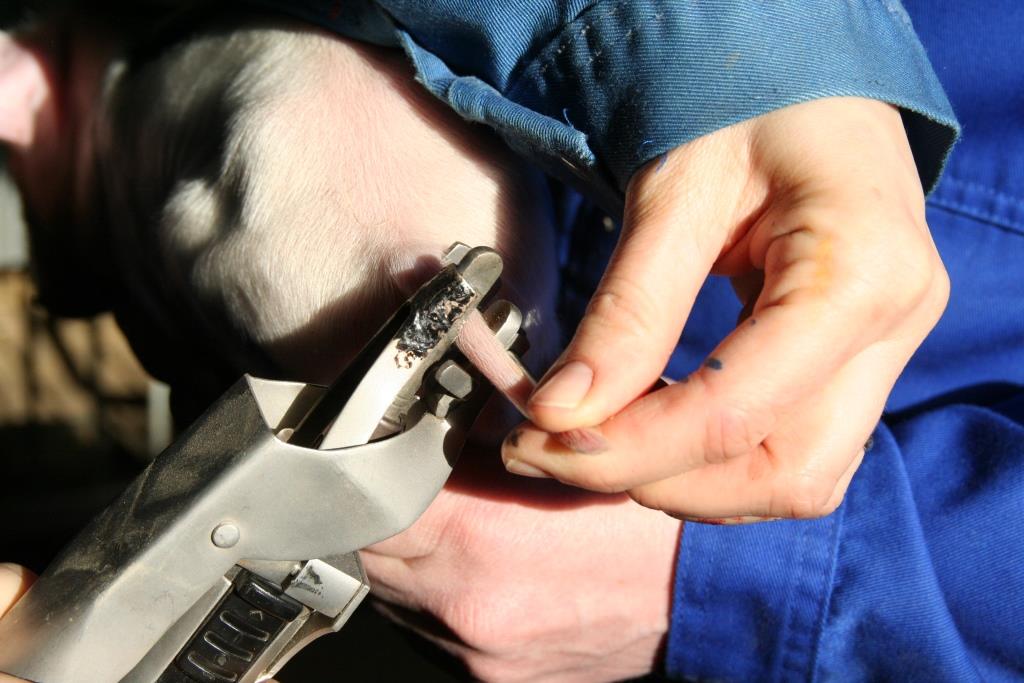
Docking a piglet's tail using cautery (hot iron)

Executive summary

The Committee on Petitions (PETI) examined on the 1st of April 2014 Petition 0336/2012 by C.R. (Danish citizen), on behalf of Dyrenes Beskyttelse (Danish Animal Welfare Society), concerning the routine tail-docking of piglets in Denmark1.

The petition raised the issue of the lack of implementation in Denmark, as well as in most EU Member States, of Council Directive 2008/120/EC laying down minimum standards for the protection of pigs, in relation to the rules governing the tail-docking of pigs.

The Commission recognised during the discussion that the implementation of the Directive in this regard is not satisfactory, but stated that it did not intend to launch infringement proceedings nor to propose amendments to the Directive, considering these actions as not appropriate. It stated instead that it preferred to rely on guidelines for Member States to ensure better implementation of the Directive, as well as on e-learning tools that are currently being developed. It also pointed to upcoming initiatives, such as framework legislation on animal welfare.

On the same day, PETI committee coordinators discussed the petition, the unsatisfactory implementation of the Directive, as well as the refusal by the Commission to launch infringement proceedings against non-compliant Member States. It was decided to request the Policy Department to analyse the issues discussed so to allow the committee to re-examine the matter during the new parliamentary term, including by potentially deciding to send a delegation to a number of Member States to investigate on the effective implementation of the Council Directive.

The present study addresses the PETI coordinators’ request to analyse the issues raised in the petition, the legal framework on the protection of pigs, the level of implementation of the Directive on the protection of pigs in relation to tail-docking on the basis of the available information, and the actions being carried out, or that could be carried out, to ensure proper implementation by Member States of the Directive requirements.

The study concludes that:

all the available evidence points at persisting high rates of non-compliance in the large majority of Member States in relation to the ban on routine tail-docking of pigs;

-Commission guidelines, training and e-learning tools, including on enrichment and manipulable materials, as well as a possible Framework Law on Animal Welfare, can be useful instruments to support farmers and Member States’ authorities in the implementation of the Directive; – at the same time, these could be accompanied by a stricter enforcement policy, notably since the Directive has been in force for more than 10 years (while the ban on routine tail-docking has been in force for more than 20 years); – the Commission could be bolder and prepared to launch infringement proceedings as an enforcement tool of last resort, as the mere prospect of serious action may prompt Member States to comply; – the Commission could also more systematically collect, monitor and publish information on the transposition of the Directive by Member States, as well as on their degree of compliance with the ban on routine tail-docking of pigs, including through inspections and specific requests to Member States.

Box 1: Tail-biting, tail-docking, routine tail-docking, enriching and manipulable material

Tail-biting, ie a pig biting another pigs’ tail, is an abnormal behaviour caused by several risk factors, notably by a poor or stressful environment frustrating the normal investigative behaviour of pigs (which are among the most intelligent and curious animals) in common intensive farming conditions. Tail-biting can result in infections, affecting the health and well-being of tail bitten pigs and can lead to tail-biting outbreaks.

Tail-docking is the practice of removing the tail or part of the tail of a pig, while routine tail-docking is the systematic docking of the tail of pigs, normally done in the early days of life, with the aim of avoiding the risk of tail-biting. It is done without anaesthesia, though it is a mutilation which is painful. Tail-docking can cause long-term chronic pain and infections, as well as redirection of the biting behaviour to other body parts, such as ears and legs.

Enriching and manipulable materials are materials such as straw, hay, wood, sawdust, mushroom compost and peat or a mixture of these, with which pigs can satisfy their explorative, playful and foraging behaviours. Studies have highlighted that the provision of such materials has a positive effect on pigs, reducing the risk of tailbiting.

Note: The opinions expressed in this document are the sole responsibility of the author and do not necessarily represent the official position of the European Parliament